Calculations and experiments with titanium alloys
How can phase predictions inform alloy production? In this undergraduate research, my contribution focused on producing three ingots and investigating laboratory observations, under supervision.
Investigating through calculations
Computational predictions
2,374
CALPHAD calculations
900 °C
Calculation temperature
Ti-Fe-Mo-Nb-V-Zr
System investigated
The research brought together 2,374 CALPHAD calculations at 900 °C in the Ti-Fe-Mo-Nb-V-Zr system to investigate phase predictions in beta titanium alloys.
Calculations
Three ingots
Initial observations
Producing and observing samples
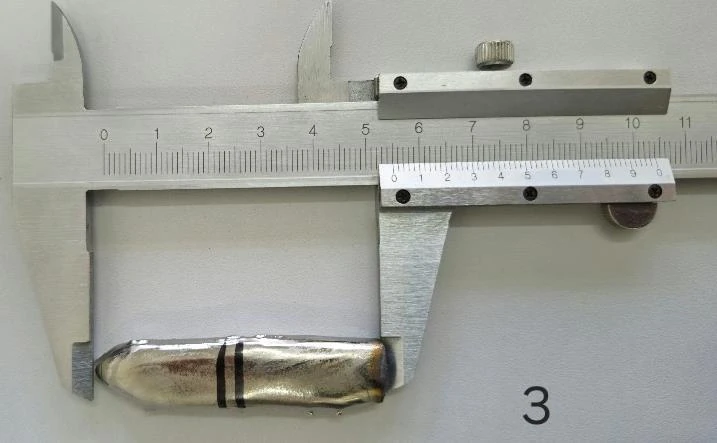
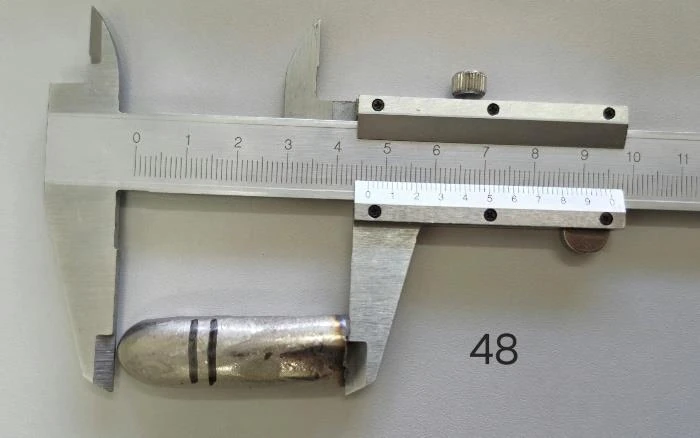
Under supervision, I personally produced three ingots. The experimental compositions were selected using a genetic algorithm by Luís G. S. Nogueira.
More photographs
Context of the records
Arthur Hubinger's undergraduate research report · work performed under supervision. Full photograph from figure 1b, page 11 of a local PDF version of the report. Record of production and visual inspection; final composition and mechanical properties were not characterized.
Arthur Hubinger's undergraduate research report · work performed under supervision. Full photograph from figure 1c, page 11 of a local PDF version of the report. Record of production and visual inspection; final composition and mechanical properties were not characterized.
Separating observation from conclusion
Completed
Calculations, three ingots and initial observations
Not characterized
Final composition, mechanical properties and biocompatibility
I produced three ingots and recorded initial observations within the research scope.
Full characterization was not performed. The ingots do not establish elastic modulus, biocompatibility, final composition or mechanical performance.
Production and hypotheses
I prepared and weighed the charges, performed arc melting and remelted each sample three to five times, inverting it between melts. The approximately 30 g ingots appeared intact, with no visible cracks and a mass close to the planned value. After observing a dark deposit in alloys with more manganese, I consulted papers to investigate possible volatilization; this hypothesis was not confirmed by compositional analysis. I also contributed to the decision to exclude silicon because of the risk of silicides and embrittlement.